
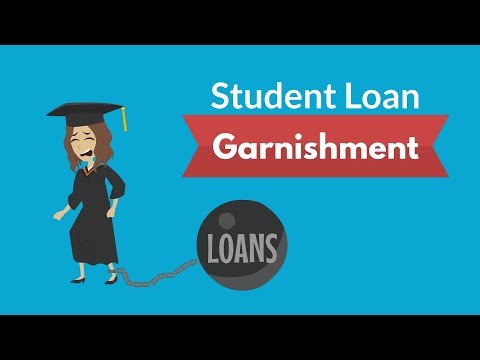
Students and parents with defaulted Federal education loans have been confused lately by a flurry of changes in the garnishment policy of the U.S. Education Department (ED). In December, the ED announced that it would resume garnishing wages from defaulted borrowers on January 7th, a practice that was suspended six years ago due to the pandemic. However, the ED reversed the resumption decision three weeks later by announcing that it would once again delay garnishments indefinitely. The move means the government will not collect $5 billion in repayments this year if the delay lasts that long.
The ED stated that the re-suspension of garnishments will give it time to institute student loan repayment reforms that give borrowers more options to repay their loans. Last year’s One Big Beautiful Bill Law (OBBBL) calls for the release of new repayment programs starting July 1 and the phasing out of a few existing ones.
At this time, 5.3 million borrowers have not made payments on their student loans for at least 270 days. This puts them at risk of having a portion of their paycheck, Social Security, or disability income garnished or their Federal and state tax refunds withheld. Another 4.3 million borrowers are severely delinquent, which means late on payments and nearing default, according to the Congressional Research Service. Interest continues to accrue on defaulted loans and borrowers must still deal with negative credit reporting even when repayments are suspended.
Under the ED’s Administrative Wage Garnishment (AWG) regulations, the ED can withhold up to 15% of a borrower’s after-tax income. The garnishment continues until the defaulted loans are paid off.
The AWG Process
On its StudentAid.gov website, the ED describes it’s garnishment policy to student borrowers as follows:
“One of the consequences of your loan being in default is that your wages may be garnished. This means your employer may be required to withhold a portion of your pay and send it to your loan holder to repay your defaulted loan. Your loan holder can order your employer to withhold up to 15% of your disposable pay to collect your defaulted debt without taking you to court. This withholding (“garnishment”) continues until your defaulted loan is paid in full or the default status is resolved.”
The steps in the AWG process are as follows:
- Garnishment applies only if a Federal student loan is in default.
- Borrowers who are delinquent but not yet in default are not subject to garnishment.
- The ED can order garnishment without a court order.
- Up to 15% of after-tax income can be garnished to repay defaulted student loans.
- Federal law protects minimum income, with borrower left with at least 30 × the Federal minimum hourly wage per week
- Before garnishment begins, the ED must provide written notice 30 days in advance.
- A debtor may request a hearing to dispute the garnishment by claiming financial hardship.
Reasons for the Reversal of Garnishment Resumption
The administration cited these reasons for the abrupt turnaround in policy:
- Implementation of the OBBBL: The ED’s justification was the need for more time to implement the OBBBL.
- New Repayment Plans: The Act overhauls the student repayment system, creating a new Repayment Assistance Plan (RAP) that is scheduled for July 1, 2026.
- Streamlining: The administration conceded that restarting involuntary garnishments before the new plans were operational would be inefficient and unfair.
- Reducing Confusion: ED stated that a pause was necessary because the previous administration’s policies had left borrowers in a predicament.
- Misleading Expectations: The ED claimed many borrowers stopped paying because they mistakenly believed their debt would be forgiven.Stability First: The ED decided that garnishments would function more efficiently and fairly only after the system was improved and borrowers had a clear path to timely repayments.
- Economic and Political Pressure: While not explicitly cited by the administration as a reason, several external factors influenced the timing, including unprecedented default rates. In 2025, student loan defaults increased at a rate 300% higher than in 2019, and advocacy pushback: A coalition of consumer and civil rights groups sent an urgent letter to the ED calling the plan economically reckless, aggravating a broader affordability crisis.
Using Hardship to Avoid Garnishment
To avoid or challenge garnishment on a defaulted Federal student loan, a borrower must prove that the deduction would cause extreme financial hardship. Under current regulations and the 2025 OBBBL, below are the specific types of hardships defenses that can be used to stop or reduce garnishment:
- The Essential Expenses Hardship – The borrower must prove that garnishing 15% of pay would make it impossible to cover ordinary and necessary living expenses for the borrower and dependents. These include, a.) Housing and Utilities: Rent/mortgage and essential services (water, heat, electricity), b.) Food and Health: Basic groceries and out-of-pocket medical costs or health insurance premiums, c.) Transportation: Expenses necessary to get to work (gas, car insurance, public transit), and Legal/Life Essentials: Court-ordered child support, alimony, and life insurance.
- The Income-Based Floor – By law, garnishment cannot leave a borrower with less than the equivalent of 30 times the Federal hourly minimum wage per week. This protects $217.50 of weekly disposable pay. If 15% would drop the borrower below this floor, garnishment must be reduced or eliminated.
- Recent Involuntary Job Loss – The borrower has an automatic defense if they are unemployed or were involuntarily separated from their previous job and have been at their current job for less than 12 months. This is designed to give newly re-employed people a grace year to stabilize their finances before garnishment resumes.
Regulatory & Procedural Defenses
Garnishment may also be stopped for non-financial hardships, such as:
- Total Permanent Disability: If a physical or mental impairment is proven that keeps the borrower from working.
- Closed School/False Certification: If the borrower’s school was closed or decertified while he or she was attending.
- Pending Bankruptcy: Once a borrower has filed for bankruptcy, an automatic stay stops all garnishment efforts.
- Active Military Service: Protections exist for service members under the Servicemembers Civil Relief Act.
Recent Comments